Support the Buckeye Trail


I received the letter below and want to encourage you to support the Buckeye Trail.  I am offering a 2-night at my cabin for the silent auction. 


Monday, February 13, 2012

Dear Diana,

Hello, my name is Yvonne and I am an avid hiker and backpacker. From the Foothills Trail of North Carolina…the Sheltowee Trace of Kentucky…the Appalachian Trail reaching from Georgia to Maine and the great state of Ohio’s own Buckeye Trail, I have backpacked hundreds of miles on these footpaths. From the strenuous climbs of a rugged mountain, to the views of a peaceful valley spreading below, I am passionate about them all and because of that love I want to help build, maintain and promote the trails and to protect the lands on which they traverse.

I want to focus on just one of these beautiful trails today…Ohio’s Buckeye Trail. The Buckeye Trail is a 1,444 mile hiking trail located entirely within the state of Ohio. It traverses 49 of Ohio’s 88 counties. From the southern terminus at Eden Park overlooking the Ohio River…this trail follows old canal towpaths, abandoned railroad rights of way, rivers, lakeshores, rural byways and primitive footpaths over forested public and private lands. It passes through state forests, state and local parks and many small towns and urban areas where traveling on foot gives you a unique perspective of our state. It is truly a gem in our very own back yards…that needs to be preserved, protected and maintained for now and for future generations.

As a volunteer of the Buckeye Trail Association (BTA), a 501(c) 3, nonprofit organization formed in 1959, I am coordinating the Silent Auction to be held at the 1st Annual Buckeye TrailFest. On April 26th-29th, 2012, the Buckeye TrailFest will feature Presentations, Workshops, Field Trips, Hikes, and this fundraiser. This letter is a personal invitation for you to get involved and to possibly donate towards this Silent Auction. All proceeds from the auction will benefit the BTA and may be tax deductible.

Thank you, for reading this letter, for researching our websites and for considering making a donation to the Buckeye TrailFest. This Silent Auction will be a grand fundraiser and a romantic weekend package for two or any offer, will be greatly appreciated by myself, Andy Niekamp and the many hikers and backpackers of Ohio…Check out their websites at http://www.buckeyetrailfest.org/ and http://www.buckeyetrail.org/

Loving Life,

Yvonne Entingh

Buckeye TrailFest Silent Auction Coordinator

Read Users' Comments (1)comments

Ereaders and Tablets

As many of you know, I use the Kindle DX for much of my reading.  Most of my Kindle books are downloaded from Amazon, a few are from the library.  Note:  library books have a 2-week due date, but that is irrelevant if you do not use the 3G on your Kindle.  If you don’t connect and sync with Amazon, the books stay on your Kindle and are readable until you delete them.

I also have a tablet.  I was “forced” to read a book on the tablet because the particular site from which I obtained that book, required use of an Android app to read it.  I dislike reading on my tablet almost as much as I dislike reading on my computer.  The screen brightness tires my eyes.  The tablet, however, makes reading easier, but enabling me to read in a number of different places and positions.  But the eyestrain will keep me from using it as a reader.

Another problem, common to tablets and the Kindle Touch, is the problem of unexpected touching interfering with the reading experience.  If you live in a house with cats, you will understand the problem.  It is not uncommon for a cat to walk across my Kindle while I am reading.  If it was a Kindle Touch, the cat paws would create unknown havoc.  Also, my own misplaced touch would frustrate the reading experience.

My conclusion:  Non-touch Ereaders with their e-ink technology provide the best experience, with fewer headaches and eyestrain. There is merit to having one device solely for reading.

Read Users' Comments (0)

Christmas Dinner

Every year in the past I have roasted turkey for Christmas, serving a “traditional” Christmas dinner to our international guests.  Perhaps traditional American or traditional European would be more accurate.  Most of my guests have been from India or East Asia and turkey and the fixings are not at all traditional there. 

This year, I decided to forget tradition and go for celebration.   (I cannot cook a Christmas dinner without European foods, I simply won’t cook the traditional ones.) That’s right, for celebration, I’ll concentrate on color and taste,  Red and green and other celebratory colors, and spices and chocolate. 

Instead of turkey, we’ll have turkey/spinach/carrot/mushroom lasagna with an Alfredo sauce.  I will cook the boneless turkey breast in my slow cooker with onion and sage and shred it for the lasagna. 

And how about an Asian inspired vegetarian dish?  Fried red curry tofu will provide protein and color. 

These main dishes will be accompanied by bright green peas, roasted red carrots on a bed of yellow squash, and other vegetables, either roasted or otherwise prepared to make the best use of their color. 

To finish, everyone likes chocolate, so Molten Chocolate cakes are in order, along with a more healthful (and French) Apple Tart-Tatin.

What will you have for Christmas?  Would you like to make some of the dishes I am making?  I’m happy to share my recipes.

Read Users' Comments (6)

Thanksgiving

(This was sent to my clients in 2004.  Some things bear repeating.)

In 1863, during the Civil War, Abraham Lincoln announced a day of Thanksgiving with these words:

Needful diversions of wealth and of strength from the fields of peaceful industry to the national defense, have not arrested the plough, the shuttle or the ship; the axe has enlarged the borders of our settlements, and the mines, as well of iron and coal as of the precious metals, have yielded even more abundantly than heretofore. Population has steadily increased, notwithstanding the waste that has been made in the camp, the siege and the battle-field; and the country, rejoicing in the consciousness of augmented strength and vigor, is permitted to expect continuance of years with large increase of freedom. No human counsel hath devised nor hath any mortal hand worked out these great things. They are the gracious gifts of the Most High God, who, while dealing with us in anger for our sins, hath nevertheless remembered mercy. It has seemed to me fit and proper that they should be solemnly, reverently and gratefully acknowledged as with one heart and one voice by the whole American People.

So, today, I thank God for our country and our blessings, but also want to thank you for paying me to do what I find so enjoyable, for always be gracious in the midst of computer problems, for allowing me to take as long as I need to fix what needs to be fixed, for putting up with me on those days when the words don't come out clearly, for all that you do that makes my job so much fun:  Thank YOU!!!

And when your computer causes you problems, before I get there, consider this:  Reverend Billy Graham writes of theologian Matthew Henry who at an old age was mugged on the street corner. That night, Henry wrote in his diary, “Let me be thankful first because I was never robbed before; second, although they took my purse, they did not take my life; third, because although they took my all, it was not much; and fourth, because it was I who was robbed, not I who robbed.” (Billy Graham, Unto the Hills (Nashville: Thomas Nelson, 1996), 411.) In the same spirit, when things go wrong with your computer or the way you use it, be thankful that you have a computer, thankful that this thing does not happen frequently, thankful that a computer is really such a small part of life (it really is!), and thankful that you are not the one who has to fix the problem! 

Read Users' Comments (0)

Getting Started

Someone asked me how to start writing.  Here are some tips:

  • Make the time.  Every day, if you can.  If you can’t manage some spare time every day, take time whenever you can.
  • Use your preferred writing medium:  computer or paper and start writing whatever is in your mind or heart. 
  • Write anything.  Write everything.  Don’t stop until you’re ready. 
  • Don’t worry about grammar or punctuation; you can take care of that later when you edit.
  • When an idea strikes, wherever you are, jot it down so you can use it later.
  • A good book to get you started might be Bird by Bird by Anne Lamott.  Easy to read with some good suggestions.

Remember, it’s not how well you start; it’s how well you finish.  So start in whatever way works for you and then work at it until you finish.  I tend to write fairly complete first drafts, but my novel may be in it’s 20th rewrite! 

Read Users' Comments (0)

Multi-Media Publishing

Desk at Rustproof Records

When I was in college, the notebook or the typewriter was the medium used to write term papers.  Multi-media meant combining one or more medium with another.  That meant, for example, gluing or taping pictures to the written document or combining the projection of still photographic images with music.  During and post-college I produced multi-media “slide shows” which were individual projected images accompanied by a sound track. 

Very soon after this, the personal computer became available, and soon after that the internet.

Today, multi-media means much more than it did during my college days.  When I or another blogger or any online source publishes text, we can combine those words with music, video, pictures, etc.  I like simple presentations, so in many ways I despise today’s multi-media.  When I  am reading, I don’t want to be distracted by other media.  Websites that automatically play music don’t stay long in my browser.  When I click on a newspaper article, I don’t want to see moving animation unless it is directly connected to the article.  Much of today’s multi-media takes the form of advertising which I particularly wish to avoid.

I recently read an article from the New Yorker.  I found it interesting, but lengthy, so I printed it to read later.  Although the piece was interesting, it referred to embedded video which I could not view in the printout.  I printed a newspaper article about spiders for my files. It had two illustrations.  However they were presented as an animated slide show, so only one of the illustrations appeared in the print out; not the one I particularly wanted.  In each case, I was left wanting.

What does this mean?  Have we become a paperless society?  Future news and information will be read on devices like the Kindle or the Fire or any tablet or phone or computer that pulls video, still images, and music from the web to your device.  Is this better or worse or indifferent.

Let’s start with better.  Never a cognitive morning reader, I found a better way to read the poem: have a professional read it to me.  I always have trouble with some punctuation marks: semi-colons and long dashes.  I was able to find a site that not only made it clear, but read sentences so I could hear the difference.  Graphics, video, and audio files all add to our understanding.

Now for the worse.  I’m tired of being bombarded with pictures and music that add nothing to the text or detract from it.  Some of these are ads; some are simply irrelevant to the text.  You have all heard the webpage that has “stupid” music playing in the background, or the page with pictures that have nothing to do with the article or blog you are reading.  That is one reason why my blog posts contain few pictures.

As for the indifferent, this is more a perspective of the reader/listener than the web designer.  After awhile we learn to tune out all but the most obnoxious tunes, pictures, and videos.  Or if one site annoys, we’ll find what we want on another.

So, embrace the multi-media that improves your experience and when you do think about what life would be like without it and give thanks for these small, but significant advances in technology.

Read Users' Comments (0)

Electronic Note Taking


When you visit any website, Amazon, a blog, a journal, any website, you might want to take notes on what you find there.  I take notes on information relating to my novels and short stories, my business, recipes, and other matters.  In the past I have recommended Microsoft One Note and have used it extensively.  The time has come to make a new recommendation.

First, let me explain why I have moved away from Microsoft One Note. Microsoft has put One Note in the place where Apple computers once lived:  in the land of non-compatibility.  In the past, if you wanted to play a certain game or use a certain app on a Mac, you couldn’t.   But Apple has gained wisdom while Microsoft’s petty attitude of superiority is costing it a loyal customer.  Simply consider one Apple app:  ITunes.  You can use it on a Mac or on a PC or on your smartphone.  Now consider the equivalent Microsoft app:  Windows Media Player.  You can use it on a PC or on your smartphone, but only if it is a Windows smartphone.  Get the picture?

The same thing holds true for One Note.  You can use it on a PC or on a Windows smartphone or an IPhone, but not on an Android phone, and certainly not Blackberry or Palm.  What if you want to use a PC, an Android phone, and an Ipad?  Say goodbye to One Note and hello to EvernoteEvernote works on almost every smartphone, tablet, and with Mac, PC, Android, Blackberry, and Palm. 

What are the functional differences between One Note and Evernote?  I set up Evernote on my Windows 7 PC and imported my notes from One Note.  All my notes from all my folders imported into a single notebook in Evernote.  However they were tagged with the name of their folder (Recipes, Cabin, Journal, etc.) so it was a simple matter to set up Evernote notebooks with those names and move the notes to the appropriate notebook. 

I used One Note mainly for saving web clippings.  I copied an article of interest to me and pasted it into Evernote.  It worked as seamlessly as One Note and looked better.  Like Amazon’s Kindle, Evernote give you an email address to let you send notes directly to Evernote.  I haven’t tried it, but it sounds like a good idea.  I can then forward an interesting email to that email address and have it saved in Evernote.  Cool.  Evernote stores your notes online, so you can access them from any computer.  Finally, Evernote is free for a basic account, which is all I and most people need.  If you want the Premium Account it only costs $5 month or $45/year. 

What else can you do with Evernote?  You can share your note by emailing it or posting it on Twitter or Facebook.  I emailed one to myself to test it and I received the body of the note in the body of the email.  I haven’t yet tried posting to Twitter or Facebook, but I expect it will work as seamlessly.

Is there any reason to continue using One Note?  I haven’t found one.  If you have, please let me know.

Read Users' Comments (0)

A Whisper of Peace: A Review

A Whisper of Peace is a novel which takes place predominately in the 19th century Alaskan wilderness.  Of all the new novels by Christian authors I have read this year, this one was the most well-crafted and well-written.

A Whisper of Peace is the story of three people who are searching for peace in their lives.  Clay, the son of a pastor ministering to Paiutes, has left his home in the Oklahoma Territory.  Armed with high expectations of following in his father’s footsteps, he tries, with little success, to start a successful church among the Athabascan natives of Alaska.  His half-sister, Vivian, joins him to get a fresh start from the secret which haunts her past.  The first Athabascan Clay and Vivian  meet is Lizzie.  Deserted by her Caucasian father and an outcast from her tribe, she seeks peace through reconciliation with her grandparents and finding her father in San Francisco. Clay and Vivian try to heal a generational rift between Lizzie, and her grandparents, an action which puts Clay and Vivian at odds with the very people they want to help and creates a dilemma between helping the one and helping the many. 

These three characters find their lives taking turns that they had not expected.  Vivian finds that her secret is not as she had believed.  She changes her life to reflect her new perspective.  Lizzie discovers her life objective changed; She changes, too.  Clay realizes that church is not what he thinks it is--a brief note from his father and he immediately feels better.  Predictably Clay and Lizzie fall in love.  You will have to read the book for yourself to find out what happens.

I enjoyed the author’s depictions of wilderness life:  canoeing, hunting, snaring, and fishing, and her description of tribal culture. (You can learn more about the Athabascan people here.) I also enjoyed the two child characters that were links between Lizzie and the missionaries and her Athabascan people.  I found most characters’ physical descriptions believable. 

I have only two complaints about the book.  First, I couldn’t generate any particular like or dislike for any of the characters.  Clay and Lizzie both have clear-cut goals and a strong determination to achieve their goals.  Vivian doesn’t know what she wants.  I wanted to find some point of identification with the characters, but their problems seemed so easily handled.  Indeed, some major problems arise, then without further comment, they disappear.  One example is a head injury which debilitates Clay until all at once it is no longer an issue.  The heavy internal issues that the characters wrestle with don’t seem to consume them as they would a real person.  At the end, the novel skips ahead two years and shows all the characters perfectly happy. 

My other complaint, and it may be related to the first one, is that the book seems old.  Not old in the sense of a timeless classic, but old in the sense that it tries to communicate to someone living in another time period, I’m just not sure where.  I recently reviewed a novel that contained a “chaste kiss;”  For a love story, this novel has no kiss at all and little passion.

Sure, Clay shows great passion for what he wants to do for God, but little passion for anyone or anything else.  Indeed, his passion for Lizzie, the woman he loves, comes only in fits and spurts and he shows very little care for his step-sister Vivian. I want an author to make me feel what the characters feel and these characters feel very little. 

That being said, this is the most well-written new Christian novel I have read this year.  There were no glaring spelling or grammar errors.  If you want to read a book purely for entertainment and to get a small glimpse of 19th century frontier life, pick this up.  But if you want to enter the world of people who lead deep lives that resonate into the 21st century, find another novel. 


I received this book free from the publisher. I was not required to write a positive review. The opinions I have expressed are my own. I am disclosing this in accordance with the Federal Trade Commission’s 16 CFR, Part 255.

Read Users' Comments (2)

Ebooks and Their Readers

At a past writer’s conference, one of the presenters gave a talk on the ontology of books.  His main point seemed to be that the ebook was a failure. It was a failure because it did not give the emotional satisfaction of a book.  It was a failure because an ebook cost as much or more to produce than a book.  He spoke about the printing industry and the emotional bond he had with his father through his father’s library.

At the time, I partially agreed.  I had no knowledge of the printing industry and how it compared to ebook production and his statements seemed reasonable.  My personal experience with my Kindle was a love/hate experience, but the love slightly outweighed the hate.  Sure the Kindle was expensive, needed to be charged, could be broken, and did not have the tactile feel of a book.  But I did find it convenient to carry.  I am usually reading several books at a time and don’t’ always know which one I will feel like reading in a particular situation.  It is also convenient not to have to move the book light every time I turn a page.  Yes, I read at night in bed.

As I have used it over the years, however, I have found the benefits to outweigh the detriments.  The Kindle is great for notes.  I don’t carry a notebook when I read; I lose notebooks.  Nor do I carry a highlighter or post-its.  The Kindle lets me mark passages and refer to them later.  If I have forgotten to mark a passage, I can do a search.  The search function is very useful when I review a book.  I can easily count the number of times an author has used a word or term.  And when I am ready to write my review, I can go back through my pages of notes and pick out quotes to use in the review.  My notes give me a link back to their location in the book so I can check context.

What don’t I like?  Sure, the battery lasts a long, long time, but I dread the day when I pick it up to write a review and it says “low battery.”   If that does happen, I can go to kindle.amazon.com and find my notes, but not link to the context.  Kindle for PC or Mac or Smartphone lets you sync with your computer or phone.  You can find your notes and link to the context.  For some books this does not work at all.  If you, as I do, acquire some of your books from a source other than Amazon, you may not be able to see your notes anywhere but your Kindle.  (*Some of the publishers I review for have their own download link for review copies.)

Library books are available for the Kindle but they are limited.  I had been hoping that borrowing with the Kindle would provide a better experience than the library.  I don’t usually borrow library books, because I have trouble returning them by the due date.  EBooks can be borrowed for two weeks only.  That short time really doesn’t bother me because there are so few books available that I would want to read.

As a writer, I keep track of the publishing industry.  The latest figures show eBooks outselling paper books.  And why not?  An eBook is instantly accessible, never smells musty, never becomes damaged.  It’s a different method of reading but the words and thoughts are the same.  Whether you prefer paper or eBook is up to you.  I’ll push to have my novels published in both forms, but will read them on my Kindle.  They were composed on a computer; why not read them on an electronic device?  Let me know what you think about eBooks and Ereaders.  Are you using them?  Do you love or hate them?

Read Users' Comments (0)

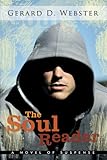
The Soul Reader By Gerard D. Webster: A Review

The Soul Reader: A Novel of Suspense
The Soul Reader has a name.  No it’s not simply the name of the book but also the description of the protagonist, Ward McNulty, who has the power (but only in sufficient light) to discern a person’s spiritual state.  Like any good hero, however, he fails to recognize his own failings. . . until the middle of the book.

This novel begins as a perilous adventure to discover the mastermind behind a series of murders.  McNulty, a journalist, has hit bottom: jobless, homeless, and crippled, when his erstwhile girlfriend, Carrie, hands him a book deal partnership where his investigative journalism skills come to the fore in their quest to expose the mastermind behind the murders of members of a large commercial fraud, including the murder of McNulty’s father.  The story unfolds with the involvement of a retired police detective, a member of the FBI, a Colombian saint, and an Italian businessman.  And let’s not forget to throw in the assassin with no identity other than “Culebra,” until the middle of the book.

Yes, it’s the middle of the book where the loose ends start to be tied while the novel falls apart.  First, let me state that if you are a traditional Roman Catholic, this novel may enthrall you.  But for other readers, it is a mess.  Disturbing news reports of McNulty’s demise cause McNulty’s mother and wannabe girlfriend to sit together and recite the rosary.  It calms them. Then McNulty, in the midst of danger, starts to say the hours, decades, or centuries. I’m not sure which, because I have no idea what any of it means.  To top it all off, I find my first textual error: a misspelled word.

You might think I am anti-Roman Catholic.  I’ll leave that to your perception.  I thoroughly enjoyed and recommended a novel where the lead character was a Roman Catholic “sister,”  and have great respect for other Roman Catholic authors including Flannery O’Connor, J.R.R. Tolkien, Malcolm Muggeridge, Walker Percy, Henri Nouwen, G.K. Chesterton, Graham Greene, and Thomas Merton.  What made “The Passion of Mary-Margaret,” a contemporary Roman Catholic novel, readable, was the simple and clear explanations of Roman Catholicisms.  And that is where The Soul Reader completely fails.

And now I must digress.  The two women find comfort in repeating “Holy Mary, mother of God, pray for us now and at the hour of our death. Amen.”  They repeat it over and over.  I have been to Roman Catholic funerals and seen and heard this.  Why not pray scripture?  Perhaps one of the Psalms?  From my perspective, reciting those words over and over is no different from reciting any word or words for meditation reasons.  Whether the word be Om or Jesus or Holy Mary, such repetition may be designed only to clear the mind for meditation.   If a Christian is in distress, as I believed these women were, why wouldn’t they call on Jesus, the author and finisher of faith?  Why wouldn’t they tell him how they feel?  Why wouldn’t they use an appropriate Psalm?  I often pray Psalm 121 or Psalm 139 in my distress.   One of the women says that she thinks of Psalm 61 while she is reciting the rosary, but that’s as far as it goes.  The Psalms are all directed to God in joy or distress or thanksgiving.  It seems to me, that if we’re calling on God is our distress, we’re going to want to directly entreat God as did our examples in the Bible,  and not call on the mother of Jesus, a practice nowhere mentioned in the Bible.   

But, digression aside, let’s return to the text.  It is in the center of the novel where I became aware of Culebra’s identity before any of the novel’s characters knew his identity, and where I began to see the secret behind the Italian businessman.  At this point, I wondered if I even wanted to read through to the end.  I have read so many bad novels by Christian authors in the past year; I would love to be proven wrong about a book that started with so much promise.

Did it prove me wrong in the end?  Partially.  There were a couple of twists I hadn’t anticipated.  There were also a couple of misspelled words, bad placement of the word “only,” one word used for its opposite meaning, and an office pulled out of thin air.  I was also irritated by the 28 times the author used the word “feature” instead of “face” or spiritual “state” or “condition.”  The author used the word “basically” three times in a single paragraph.  He used the word animal magnetism only once but once is too often in any writing.  I also found problems with simile and comparison.  Perhaps I am too literal, but does this work on any level? 

. . . as insensitive to the feelings of others as a buzzard would be to the feelings of roadkill.

Or how about this comparison?

Mercy was more foreign than Mercury. . .

No, there was no science fiction or space travel in this novel and no consideration of the night sky.

This Soul Reader was a good start for this author.  With a good editor, he could lose the middle and the very end and add some real passion and emotion rather than a “chaste kiss,” He might then have a book full of exciting moments.  As the book stands, however, only a Roman Catholic reader might truly enjoy it. 

I received this book free from the publisher. I was not required to write a positive review. The opinions I have expressed are my own. I am disclosing this in accordance with the Federal Trade Commission’s 16 CFR, Part 255.

Read Users' Comments (0)

TheHighCalling.org Christian Blog Network